Moving to Spain with kids is one of those decisions that sounds romantic until you are standing in a government office trying to explain your family's situation in a language you thought you knew. In January 2025, I boarded a flight to Spain with a carry-on bag, a spreadsheet of cities I had been researching for months, and one mission: find the right place for my family to start over.
Fourteen months later, I am writing this from El Puerto de Santa Maria, a quiet town across the bay from Cadiz. My family has been here since September 2025. We are six months into our new life, and I am building PeerLingo, the language confidence app I desperately wished existed when we arrived.
This is the story of how we got here and why it matters.
Scouting Spain for Our Family: January to September 2025
I traveled all over Spain during those first months. Madrid, Barcelona, Valencia, Malaga, Seville, Granada, Alicante, and a handful of smaller coastal towns. I had a checklist for each city: cost of living, school options for the kids, safety, walkability, expat community, and that harder-to-measure thing you can only feel when you walk through a neighborhood at 7pm and see whether families are out.
Madrid was exciting but intense. Barcelona was beautiful but the rental market felt impossible. Valencia checked a lot of boxes but felt too polished, too "expat-packaged." Malaga was growing fast but the areas we could afford did not have the community feel I wanted.
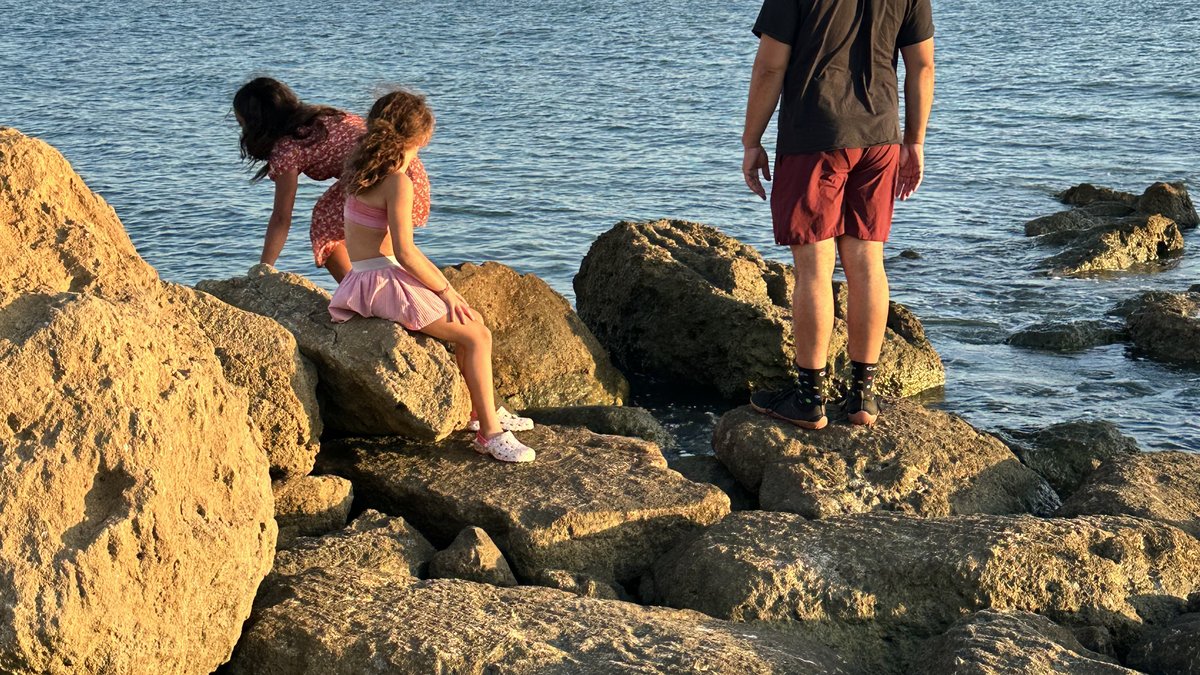
Then I visited Cadiz province. I remember walking along the waterfront in El Puerto de Santa Maria in the early evening. Kids were playing in the plaza. Families were sitting outside restaurants. The pace was slower. The air smelled like salt and fried fish. And the cost of living in Cadiz was a fraction of what we would pay in the bigger cities.
I called my partner that night and said, "I think I found it."
The Reality of Settling In with Kids
We moved in September 2025. Within the first week, every romantic notion I had about our new life collided with reality.
Enrolling the kids in school required documents I did not know existed. The padron, the certificado de empadronamiento, translated birth certificates with apostilles. I stood in government offices for hours, trying to explain what we needed in my intermediate Spanish, which turned out to be completely inadequate for bureaucratic vocabulary.
But the hardest part was not the paperwork. It was watching my kids.
When Your Expat Kids Go Quiet
My children knew some Spanish. We had used apps. We had practiced at home. On paper, they were "prepared."
In practice, they were terrified.
My oldest would come home from school and barely talk about the day. When I asked how it went, I got one-word answers. "Fine." "Okay." I found out weeks later that he had been sitting alone at lunch because he could not figure out how to join a conversation that was happening too fast, in an accent that sounded nothing like what he had practiced.
My younger one cried before school three mornings in a row during the second week. Not because anyone was mean. Because she could not understand what the teacher was asking her to do, and she felt stupid. Her words, not mine.
That is when something shifted for me. I stopped thinking about this as a "settling in" problem and started seeing it as a confidence problem. My kids did not need more flashcards. They did not need another app that would quiz them on colors and animals. They needed to feel brave enough to try speaking, even when they might get it wrong.
The Gap in Language Learning Apps for Kids
I looked at every language learning app designed for children. Duolingo, Dinolingo, Gus on the Go, Mondly Kids, Little Pim. They all do the same thing: gamify vocabulary. Earn points for matching words to pictures. Streak counters. Achievement badges.
None of them address what expat kids actually need: the courage to open their mouth in a room full of native speakers.
Vocabulary is necessary, but it is not sufficient. The gap between "knowing words" and "being willing to use them" is enormous. And for kids, who are navigating social dynamics on top of language barriers, that gap can feel like a canyon.
I searched for something that focused on spoken confidence. Something that created a safe, low-pressure environment where kids could practice real conversations without the fear of judgment from peers. Something that understood the difference between a child who "knows Spanish" and a child who "uses Spanish."
It did not exist.
This Is Why PeerLingo Exists
We are building a language confidence platform for expat kids ages 6-14, starting with Spanish and expanding to more languages. Safe, AI-moderated practice that builds courage before grammar. Join the waitlist to be first in.
Join the Waitlist →What PeerLingo Is Building
PeerLingo is not another vocabulary app. It is a confidence engine for expat children.
The core idea is simple: kids learn to speak by speaking. But speaking requires courage, and courage requires a safe environment. So we built one.
The app uses AI-moderated voice practice where kids can try real-world conversations, things like asking a classmate to play, ordering at a cafeteria, or telling a teacher they do not understand, without the pressure of doing it live for the first time. Think of it as a rehearsal space for the moments that matter most.
We are also building a buddy system where kids can practice with other expat children who are going through the same transition. Because knowing that someone else is also nervous, also fumbling, also trying, that changes everything.
And for parents, there is a dashboard that shows confidence progress, not just quiz scores. Because I can tell you from experience: your child scoring 90% on a vocabulary quiz and your child confidently introducing themselves at a birthday party are two very different things.
Why We Chose Cadiz for Building PeerLingo
People ask me why I did not build this in a "startup city" like Madrid or Barcelona. Three reasons.
First, the Andalusian accent is one of the hardest in Spain. The locals here drop consonants, merge words, and speak at a pace that makes your textbook Spanish feel like a different language. If PeerLingo can help a child understand and communicate in Cadiz, it can work anywhere in the Spanish-speaking world.
Second, we are our own test case. My kids use the app. I watch what works and what does not in real time. Our dinner table conversations are my product feedback sessions.
Third, this is where our life is. I did not move to Spain to sit in a coworking space. I moved here so my family could live a different kind of life. Building PeerLingo from El Puerto, surrounded by the exact challenge we are trying to solve, keeps me honest.
What Comes Next
If you are reading this, you might be in one of three places:
You are thinking about moving to Spain with your family and wondering what it is really like. I will be writing about the real cost of living and our school experience on this blog, so check back for new posts or join the waitlist below to get updates.
You already live abroad and your child is struggling with the language. I see you. That confidence gap is exactly why PeerLingo exists, and you are not alone in this.
You are a founder building something from a non-obvious place and wondering if it is possible. It is. I will be writing about that too.
This blog is going to be the honest, unfiltered documentation of our life in Spain and the building of PeerLingo. The wins, the failures, the school meetings where I did not understand half of what was said, and the moments when my kids finally, voluntarily, spoke Spanish to someone without me prompting them.
Those moments are why I am doing this.
Moving to Spain with Kids?
Get weekly updates from the blog and be first to try PeerLingo when we launch.
Join the Waitlist →